

Dec 8, 2025
Top ERM Frameworks to Strengthen Risk Management in 2026

By Fraxtional LLC

Summarize the blog with AI
80% of organizations list risk management as a top priority for strategic planning, but many still struggle to execute it effectively. This challenge is especially pronounced in sectors such as FinTech, Banking, Cryptocurrency, and Private Equity, where regulatory requirements and operational risks are high.
With mounting regulations and market fluctuations, managing risks becomes a daily challenge. The complexity of these factors can result in compliance issues or expensive disruptions. Without a clear framework in place, businesses often struggle to manage these risks as they grow.
In this blog, we’ll explore the essentials of an Enterprise Risk Management (ERM) framework. We’ll cover its key components, steps for implementation, and common challenges. Finally, we’ll explain how ERM helps improve strategic decision-making and risk handling.
TL;DR
- ERM is a process for identifying, assessing, and managing risks to support business goals and stability.
- Popular ERM frameworks like COSO, RIMS, ISO 31000, and NIST cater to different industries and needs.
- Implementing ERM involves leadership, risk identification, developing response strategies, and ongoing monitoring.
- Challenges like limited resources and resistance to change can be addressed with external support and communication.
- Emerging trends like AI, machine learning, and cloud platforms are improving risk management and decision-making.
What is Enterprise Risk Management (ERM)?
Enterprise Risk Management (ERM) is a systematic process that organizations use to identify, evaluate, and manage risks that may impact their long-term objectives and overall success. It covers financial, operational, regulatory, and reputational risks and develops strategies to minimize their impact.
Unlike traditional risk management, which targets specific areas, ERM takes a holistic view across the business. By aligning risk management with business objectives, companies can prioritize risks and allocate resources more effectively, helping maintain stability in uncertain environments.
With a clear understanding of ERM, let's explore the core elements that define an effective risk management strategy.
The Essential Components of a Strong ERM Framework
An effective ERM framework includes several key components that work together to manage risks across the organization. These components help align risk management with strategic objectives and ensure that risks are proactively addressed. Below are the essential elements of a comprehensive ERM framework:
- Governance and Leadership: Strong leadership is crucial for driving the ERM process. Leadership sets the tone for risk management, ensuring it’s embedded into the company culture and strategy.
- Risk Appetite and Risk Tolerance: Setting clear levels for risk appetite and tolerance helps organizations determine which risks they are comfortable accepting and where they need to take action to mitigate potential issues.
- Risk Identification: Identifying both internal and external risks is the first step in risk management. This process includes monitoring emerging risks and assessing their potential impact on the organization.
- Risk Assessment and Evaluation: After identifying risks, organizations must assess their likelihood and impact. Risk Assessment Services can offer expert guidance to help prioritize risks and focus on the ones that matter most.
- Risk Response Strategies: Once risks are evaluated, businesses must develop response strategies. These may include risk mitigation, avoidance, transfer, or acceptance, depending on the risk’s nature and potential impact.
- Monitoring and Reporting: Ongoing monitoring of risks ensures that the organization stays informed about changes or new risks. Regular reporting to stakeholders ensures that the risk management process remains aligned with business goals.
- Continuous Improvement: ERM frameworks should be reviewed regularly to adjust to new risks and ensure the strategies stay effective and relevant over time.
Knowing the components, you can now assess which ERM frameworks best support your organization’s objectives.
4 Popular ERM Frameworks for Risk Management Success
Organizations adopt different ERM frameworks depending on their specific needs and risk environments. These frameworks provide structured methods for managing risks across the enterprise. Below are some of the most widely recognized ERM frameworks that businesses can consider for effective risk management.
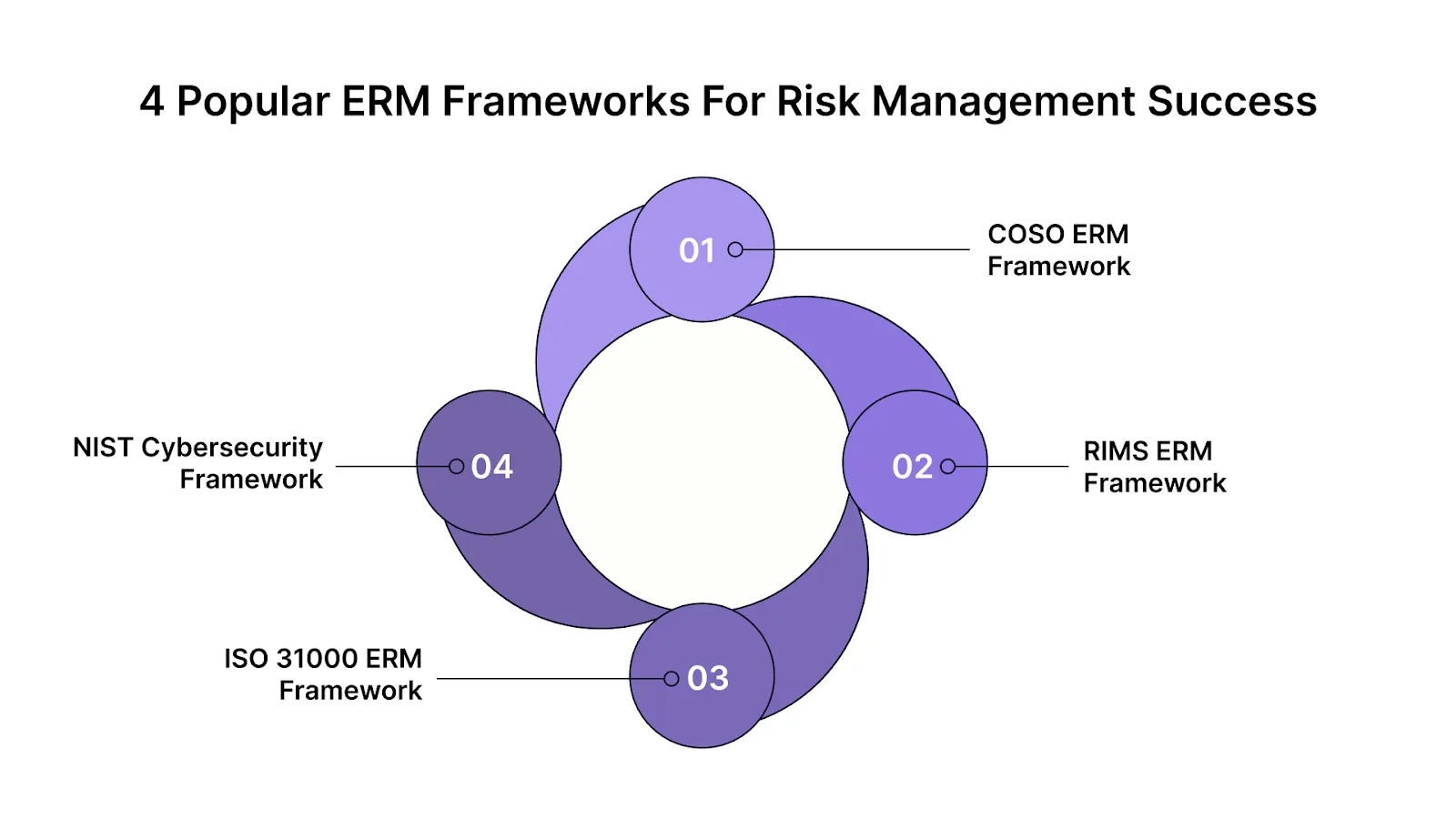
1. COSO ERM Framework
The Committee of Sponsoring Organizations (COSO) ERM framework is one of the most widely used models, integrating risk management with governance, strategy, and performance. The 2017 update introduced five interrelated components:
- Governance and Culture
- Strategy and Objective-Setting
- Performance
- Review and Revision
- Information, Communication, and Reporting
Application: COSO is ideal for organizations with multiple stakeholders and complex structures. Fractional CROs and CCOs can help implement and oversee ERM frameworks, offering experienced leadership without the cost of full-time executives.
2. RIMS ERM Framework
The Risk Management Society (RIMS) ERM framework is flexible and focused on risk maturity. It uses the Risk Maturity Model (RMM) to assess and improve risk management capabilities over time, allowing businesses to adapt their processes as they evolve.
Key Components: RIMS emphasizes risk appetite, culture, identification, assessment, treatment, and continuous improvement. It doesn't prescribe fixed components but encourages organizations to tailor their approach based on their needs.
Application: RIMS is ideal for SMEs and organizations that require a flexible, evolving approach to managing risks. Its focus on maturity allows businesses to improve their risk management practices progressively.
3. ISO 31000 ERM Framework
The ISO 31000 framework provides global guidelines for risk management, structured around three core elements: principles, framework, and process.
Principles: Ensures risk management is integrated, structured, and inclusive.
Framework: Focuses on leadership, integration into processes, and continual evaluation.
Process: Involves risk identification, analysis, evaluation, treatment, monitoring, and communication.
Application: ISO 31000 is suitable for multinational organizations needing a standardized approach to risk management. It ensures consistency across various jurisdictions, making it ideal for regulated entities.
4. NIST Cybersecurity Framework (CSF)
The National Institute of Standards and Technology (NIST) Cybersecurity Framework is designed to help organizations manage cybersecurity risks. It includes five core functions:
- Identify
- Protect
- Detect
- Respond
- Recover
- Govern (added in CSF 2.0)
Application: NIST is especially useful for sectors like FinTech, healthcare, and critical infrastructure, where managing cybersecurity risks is crucial. Its structured approach helps ensure compliance with data protection regulations like HIPAA and GLBA.
Understanding the differences between these frameworks will provide a clearer idea of how to select the right one for your organization.
A Detailed Comparison of Leading ERM Frameworks
Different ERM frameworks offer various approaches, and choosing the right one depends on several factors such as organizational size, industry, and risk profile. Below is a comparison of the most widely adopted frameworks to help you understand their unique strengths and applications.
Once you’ve selected an ERM framework, it’s essential to follow a structured plan to ensure successful application.
Step-by-Step Guide to Successfully Implementing an ERM Framework
Implementing an ERM framework requires careful planning and clear steps to ensure success. It involves assessing risks, developing response strategies, and continuously monitoring risks. Below are the key steps for successfully implementing an ERM framework in your organization.|
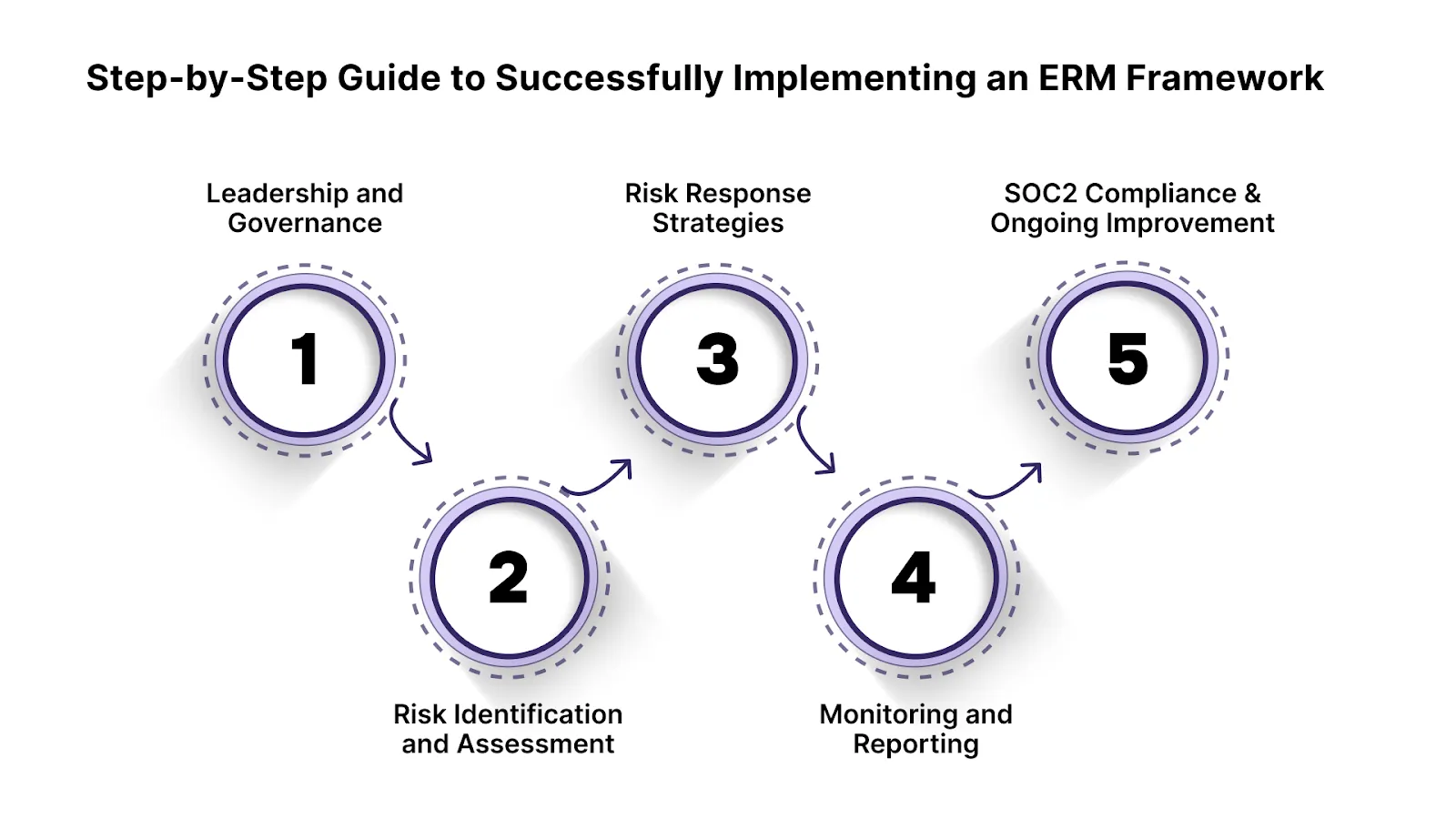
- Phase 1: Leadership and Governance: Establish a governance structure with strong leadership to set the tone for risk management across the organization. Interim CCO executive services can provide the necessary leadership if you lack a full-time compliance officer.
- Phase 2: Risk Identification and Assessment: Identify and assess both internal and external risks that could affect your business. Consider using Risk Assessment Services to help evaluate and prioritize risks effectively.
- Phase 3: Risk Response Strategies: Develop appropriate strategies for each identified risk, whether it involves mitigation, avoidance, transfer, or acceptance.
- Phase 4: Monitoring and Reporting: Implement a system for regularly monitoring risks and their mitigation progress. Ensure consistent reporting to leadership and stakeholders.
- Phase 5: SOC2 Compliance and Ongoing Improvement: Regularly review the ERM framework and assess your organization's SOC2 compliance to ensure security and regulatory requirements are met. Regular reviews and updates ensure that the framework remains effective as the organization grows.
As you work through the steps of ERM implementation, it’s crucial to recognize and address potential challenges along the way.
Common Challenges in ERM Implementation and How to Overcome Them
Implementing an ERM framework can be challenging, especially for businesses with limited resources or complex operations. Common barriers include insufficient leadership, lack of expertise, and resistance to change.
Here are the key challenges organizations face and how to overcome them.
- Limited Resources: Smaller businesses often struggle with resource constraints when implementing ERM. Consider using Interim CCO Executive Services to provide necessary leadership and expertise without the cost of full-time hires.
- Lack of Expertise: Without the right in-house risk management experience, it can be difficult to set up a comprehensive ERM system. Engaging specialized Risk Assessment Services can provide valuable insights and help fill this gap.
- Resistance to Change: Employees may resist new processes that affect their day-to-day operations. Clear communication and training on the benefits of ERM can help mitigate resistance.
- Complex Regulations: Businesses in regulated industries like FinTech and Crypto face compliance challenges. Regular assessments, including ensuring SOC2 Compliance, can help ensure all regulatory requirements are met.
- Siloed Operations: A lack of integration between departments can hinder an effective ERM framework. Building cross-functional teams and setting clear communication protocols can improve collaboration and risk management effectiveness.
Need leadership for effective ERM implementation? Fraxtional provides dedicated executives to help you succeed. Contact us now!
Emerging Trends Shaping ERM

Technology and data analytics are changing how companies approach risk management. These tools offer new ways to identify, assess, and respond to risks. Below are some emerging trends that are enhancing ERM frameworks.
- Artificial Intelligence (AI) and Machine Learning: AI and machine learning algorithms are being used to predict and assess risks more accurately. These technologies help detect patterns and trends that would otherwise go unnoticed.
- Data-Driven Decision-Making: Data analytics tools enable organizations to gather and analyze large amounts of data, which helps in making informed risk management decisions. Real-time data analysis supports faster response times to emerging risks.
- Cybersecurity Advancements: With increasing cyber threats, advanced cybersecurity technologies are becoming integral to ERM. These technologies help identify vulnerabilities and protect sensitive data more effectively.
- Automated Reporting and Monitoring: Automation tools are making risk monitoring and reporting more efficient. These tools can provide real-time risk updates and automatically generate reports for leadership.
- Cloud-Based Risk Management: Cloud-based platforms are enabling businesses to access risk management tools remotely and collaborate across departments. These platforms also provide scalability and flexibility for growing organizations.
Staying aware of these trends allows you to build a more informed and effective ERM framework for your business.
Conclusion
Implementing an effective ERM framework is essential for businesses seeking to manage risks and maintain stability. With the right leadership, tools, and strategies, organizations can address risks proactively and ensure long-term success.
By adopting best practices and staying informed about emerging trends, businesses can build a resilient risk management system that supports their goals.
If you need assistance in implementing or improving your ERM framework, we are here to help. Contact us today to discuss how our expert leadership services can support your risk management needs.
FAQs
A senior leader, often a Chief Risk Officer (CRO), typically oversees the ERM initiative. In the absence of a full-time CRO, a fractional CRO can provide leadership. The team assigns "risk owners" across departments who manage and report on specific risks. Coordination is key, with regular updates and cross-functional collaboration.
Risk assessments should be revisited annually and whenever significant changes occur, such as strategic shifts or external pressures. In fast-changing sectors like FinTech or Crypto, more frequent updates are advised.
Yes. ERM helps identify not only risks but also opportunities by assessing uncertainty broadly. It ensures the organization responds to both potential threats and growth opportunities.
Indicators of success include fewer unexpected losses, completed mitigation actions, timely risk reporting, and better decision-making aligned with risk appetite. A unified "risk register" also shows maturity.
Yes. Large, regulated organizations require a formal ERM system with clear governance and reporting. Smaller businesses or those in less regulated industries may opt for a lighter framework, but still follow core risk management principles.
blogs
Don’t miss these
.jpg)


Let’s Get Started
Ready to Strengthen Your Compliance Program?
Take the next step towards expert compliance solutions. Connect with us today.