

Sep 19, 2025
Fractional Employment and Its Benefits for the Workforce

By Fraxtional LLC

Summarize the blog with AI
Fractional employment is changing how companies access expertise and how professionals shape their careers. Instead of full-time roles, businesses now hire skilled individuals for part-time or project-based engagements.
In 2025, fractional employment is rapidly growing across industries such as fintech, technology, and creative sectors. Understanding this evolving workforce trend allows businesses to stay agile and competitive while enabling professionals to diversify their work and income streams.
This article explores what fractional employment means and why it matters to today’s workforce and businesses.
Key Takeaways:
- Flexibility Without the Full-Time Cost
Fractional employees give you the expertise of top-tier professionals without the overhead of full-time salaries and benefits. It’s a cost-effective way to scale your team when needed. - Specialized Expertise on Demand
Need a CCO, CFO, or risk expert for a specific project or ongoing support? Fractional workers bring in the specialized knowledge you need without the long-term commitment. - Perfect for Growing Businesses
Startups, scale-ups, and any business in between can use fractional employees to grow and manage important tasks without hiring full-time. - Works for Every Industry
Fractional roles aren't just for startups; they’re great for fintech, tech, private equity, and more. Every business can benefit from flexible, on-demand talent that fits its specific needs.
What is Fractional Employment? (Defining the Model)

Fractional employment is a flexible work model where experienced professionals provide part-time expertise to multiple companies simultaneously.
Unlike freelancing or traditional part-time work, fractional employees take on ongoing, integrated roles with defined responsibilities rather than short-term or project-based gigs.
This model is gaining traction, especially in industries needing specialized skills but unable to justify full-time hires.
It offers businesses access to senior-level talent on a flexible basis, driving agility and cost-efficiency, while professionals benefit from portfolio careers and better work-life balance.
Core Characteristics of Fractional Work
Fractional work has distinct features that set it apart within the evolving employment landscape:
- Part-Time Engagement with Multiple Employers: Professionals typically work part-time across two or more organizations concurrently, often dedicating one to three days a week per employer.
- Long-Term & Ongoing Roles: Unlike consultants or freelancers hired for discrete projects, fractional employees hold ongoing responsibilities and play strategic roles.
- Specialized Expertise: Fractional workers usually bring senior-level skills, such as fractional CFOs, CMOs, or technical leaders.
- Integration into Company Culture: These professionals collaborate closely with internal teams and contribute to organizational goals beyond advisory capacity.
- Contractual Clarity: Work agreements define scopes, deliverables, and expected hours, often structured as retainers.
- Cost-Effective Leadership: Companies gain access to high-level talent without paying full-time salaries or benefits.
Fractional vs. Part-Time vs. Freelance vs. Consulting (Comparison Table)
Also Read: Comprehensive Guide to Fractional Support and Its Benefits
Types of Fractional Employment Roles
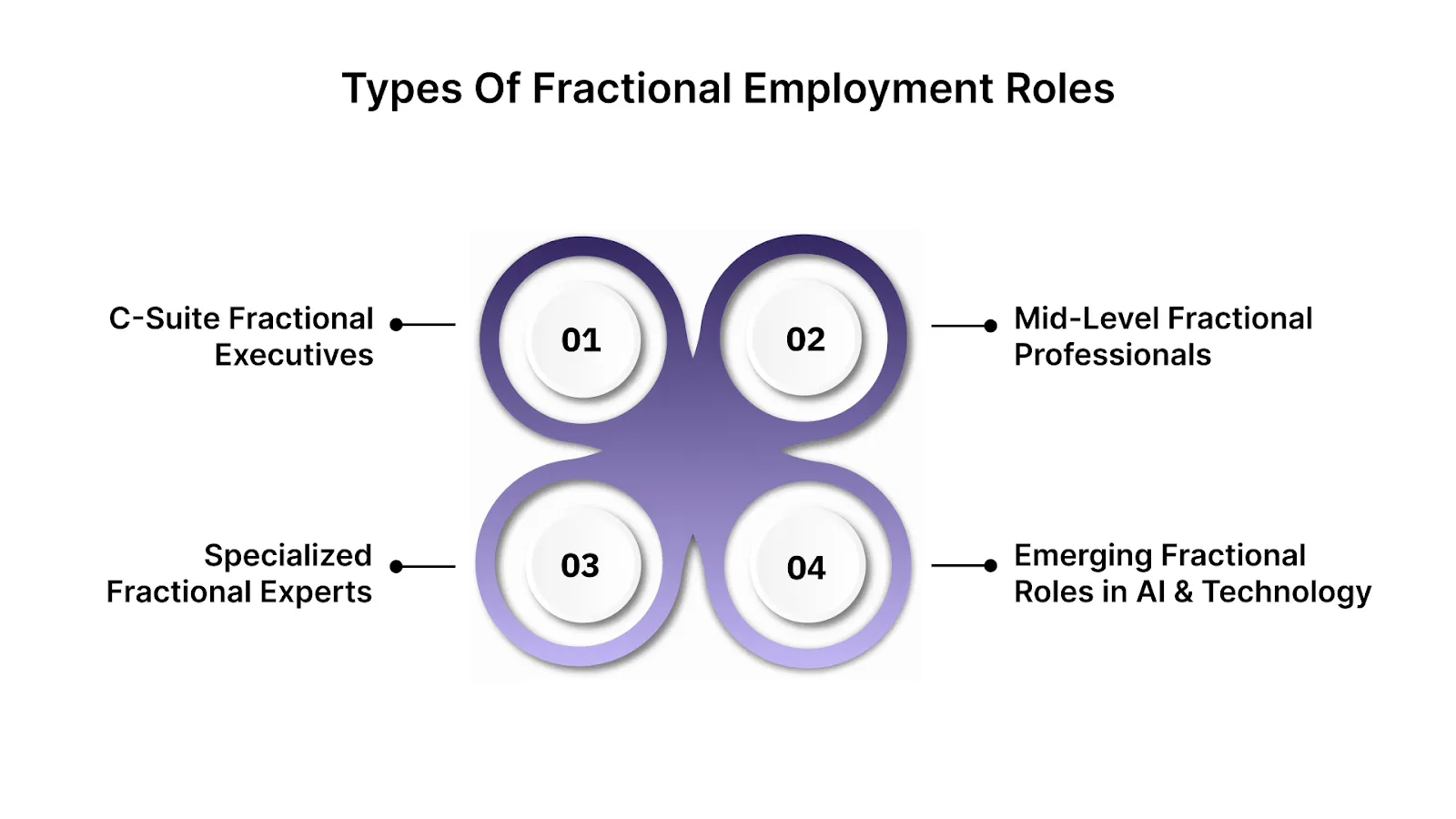
Fractional employment spans various levels and functions, offering companies flexible access to expertise without the full-time cost.
From top-tier C-suite executives to specialized professionals in technical and creative roles, fractional positions meet diverse business needs. The rise of technology and AI also creates new fractional roles focused on innovation and digital transformation.
1. C-Suite Fractional Executives (CEO, CFO, CMO, CTO, CHRO)
C-suite fractional executives provide high-level leadership on a part-time basis, delivering strategic guidance without a full-time salary commitment. Common fractional executive roles include:
- Fractional CFO: Oversees financial strategy, budgeting, and forecasting. Ideal for startups or scale-ups needing experienced financial leadership part-time.
- Fractional CMO: Develops marketing strategies, manages brand growth, and leads campaigns. Flexible support for growing companies needing expert marketing direction.
- Fractional CTO: Leads technology strategy, architecture planning, and digital transformation initiatives. Helps organizations integrate new technologies efficiently.
- Fractional CHRO: Manages talent acquisition, employee engagement, and HR policies. Supports companies in optimizing workforce strategy with leadership expertise.
- Fractional CEO: Provides overarching business leadership, guiding company vision and operations during growth or transition phases.
Typically, these executives commit to 1-3 days per week with each client, integrating closely with teams to influence key decisions and outcomes.
2. Mid-Level Fractional Professionals
Beyond the C-suite, many businesses hire fractional managers and specialists to fill essential operational roles without full-time hires. Examples include:
- Project Managers who lead specific initiatives on a part-time basis.
- Finance Managers delivering crucial reporting and compliance functions.
- Marketing Managers oversee campaigns and digital channels.
- HR Managers provide policy support and employee relations.
These professionals help companies handle workload fluctuations while maintaining continuity and quality.
3. Specialized Fractional Experts (Technical, Creative, Operational)
Fractional work extends to experts offering niche skills such as:
- Technical Specialists: Cloud architects, cybersecurity analysts, and software developers working part-time to solve specific challenges.
- Creative Professionals: Graphic designers, content strategists, and UX/UI designers supporting brand and product development.
- Operational Experts: Supply chain consultants, quality assurance professionals, and process improvement advisors optimizing efficiency.
Specialists engage on flexible terms matching project needs and business cycles, delivering deep expertise as needed.
4. Emerging Fractional Roles in AI and Technology
The rapid advancement of AI and digital technologies is generating new fractional opportunities, including:
- AI Strategy Consultants helping companies incorporate AI solutions.
- Data Scientists delivering on-demand analytics and insights.
- Automation Engineers optimizing business processes.
- Digital Transformation Leaders guiding tech adoption and change management.
These roles help organizations innovate cost-effectively while accessing top talent tailored to evolving technology demands.
Also Read: Is an Outsourced Chief Compliance Officer Right for You?
Benefits of Fractional Employment for Companies
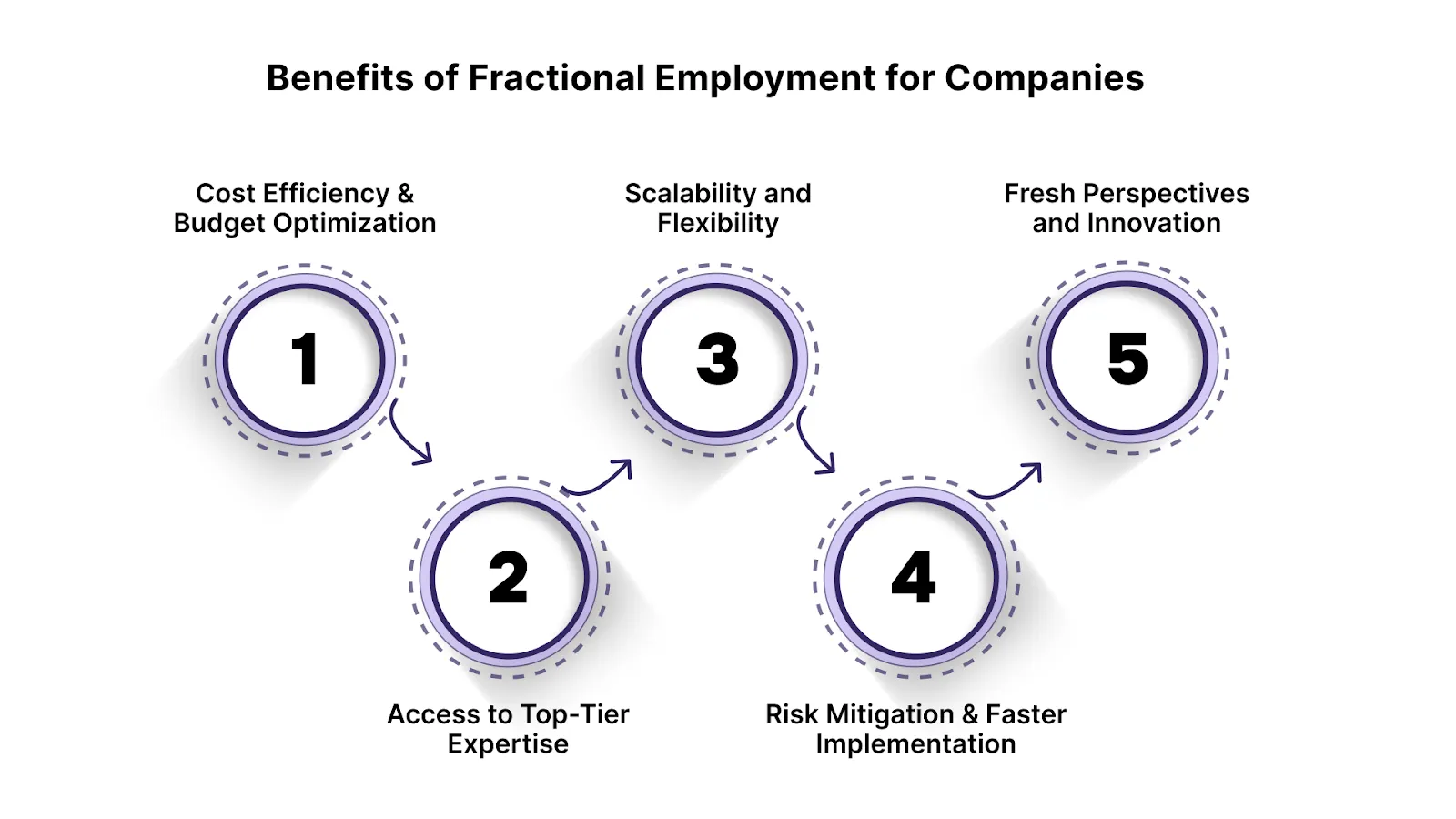
Fractional employment offers companies powerful advantages, creating a strategic edge in today’s dynamic markets.
1. Cost Efficiency and Budget Optimization
Hiring fractional employees can reduce labor costs by 40-60%. Businesses pay only for the expertise and hours needed, avoiding full-time salaries, benefits, and overhead expenses like office space. This lean model drives budget flexibility and financial predictability.
2. Access to Top-Tier Expertise
Fractional roles open doors to senior-level talent that might be unaffordable or unavailable full-time. Companies benefit from specialized skills and experience critical for growth and competitive advantage, without long-term hiring commitments.
3. Scalability and Flexibility
Businesses can quickly scale resources up or down based on projects and market demands, providing agility. Fractional hiring supports evolving needs with minimal risk, enabling rapid response to opportunities or challenges.
4. Risk Mitigation and Faster Implementation
Fractional professionals often bring proven strategies and deep knowledge for efficient risk management and regulatory compliance. Their flexible presence accelerates decision-making and execution, shortening time to impact.
5. Fresh Perspectives and Innovation
Engaging diverse fractional experts injects new ideas and innovation. This external input challenges status quo thinking and fosters creative problem-solving, essential for staying ahead in competitive industries.
Cut costs, access expertise, and stay flexible. Want to see how fractional employees can benefit your business? Get in touch with Fraxtional today.
How Fractional Employment Works in Practice

Fractional employment functions through flexible engagement models designed to balance company needs with professional expertise.
This approach allows companies to access critical skills precisely when required, without the long-term costs of full-time hires.
Engagement Models and Time Commitments
Most fractional roles are ongoing part-time engagements averaging 10 to 20 hours per month per client. Common structures include:
- Retainer Agreements: Professionals commit to regular weekly or monthly hours.
- Engagement Duration: Typical contracts last from several months to multiple years, allowing for strategic involvement.
- Multiple Clients: Fractional professionals often manage several clients concurrently, providing varied insights while balancing time effectively.
Monthly Retainers vs. Project-Based Pricing
Two main pricing models dominate fractional work:
- Monthly Retainers: Offer predictable costs and consistent access to expertise, ideal for ongoing leadership or advisory roles requiring continuity.
- Project-Based Pricing: Best for short-term projects with clear deliverables and deadlines, providing budget clarity.
- Hybrid Approach: Many fractionals blend retainers and project fees to suit diverse client needs.
Integration with Internal Teams
Effective fractional employment depends on seamless team integration:
- Fractional professionals act as embedded collaborators.
- They participate in strategic meetings and align with company culture.
- These professionals complement internal staff and often bridge leadership with operations.
- This integration accelerates decision-making and project execution.
Technology Tools and Platforms Enabling Fractional Work
Technology is essential to fractional success:
- Communication Tools: Slack, Microsoft Teams, Zoom enable real-time collaboration despite geographic separation.
- Project Management: Platforms like Asana, Trello, and Jira keep workflows organized and aligned with goals.
- Hiring Platforms: Specialized marketplaces streamline fractional hiring, contracts, and payments.
- AI and Automation: Tools assist in routine tasks, enhancing productivity and focus on strategic work.
Together, these technologies create an efficient remote work environment and allow companies to scale fractional talent globally.
Also Read: Fintech Compliance: Essential Practices and Challenges
Industries and Companies Ideal for Fractional Employment

Fractional employment is especially beneficial in industries where specialized expertise is needed but full-time hires are not always practical.
Companies in sectors like fintech, startups, and technology are increasingly turning to fractional roles to remain agile while accessing top-tier talent.
1. Fintech and Financial Services
The rapidly changing regulatory environment in fintech requires expertise in compliance and risk management.
Fractional professionals such as Chief Compliance Officers (CCOs) or Chief Risk Officers (CROs) can help businesses navigate these complex regulations without the need for full-time executives.
- Why it Works: Fintech companies are often in growth phases, requiring expert knowledge in compliance, security, and financial regulation but don’t have the scale to justify full-time roles.
2. Startups and Scale-Ups
Startups need leadership, particularly in areas like finance, marketing, and technology, but may not have the resources to hire full-time executives.
Fractional roles offer the experience and strategic guidance necessary to drive growth without the expense of permanent staff.
- Why it Works: These companies benefit from fractional expertise in critical roles while focusing on their core business goals, saving on operational costs.
3. Small and Medium Enterprises (SMEs)
SMEs can gain specialized knowledge in areas like compliance and HR without hiring full-time, expensive executives.
Fractional professionals step in to manage key functions, helping businesses maintain competitiveness and compliance with industry regulations.
- Why it Works: SMEs often lack the budget for full-time leaders but still need expertise to keep their operations running smoothly.
4. Private Equity and Investment Firms
Investment firms require specialized skills for managing portfolios and ensuring compliance with regulations.
Fractional experts can be brought in for audits, risk assessments, and regulatory reviews, offering targeted support without long-term commitments.
- Why it Works: These firms often need expert advice for specific projects, making fractional professionals an ideal solution for managing risk and compliance on a flexible basis.
5. Technology and SaaS Companies
Tech companies face unique challenges in data security and regulatory compliance. Fractional professionals in roles like cybersecurity or data privacy can ensure these companies meet industry standards while staying agile in a fast-changing environment.
- Why it Works: Technology firms may need specialized skills in security or compliance, but only temporarily, making fractional roles a cost-effective and flexible solution.
Fractional employment enables these industries to stay adaptable and competitive while ensuring access to the right expertise when it's most needed.
Fintech, tech, or any industry in between can benefit from fractional leadership. Curious to see how it works for your industry? Let’s talk!
Fractional Employment vs. Traditional Staffing Models
When deciding between fractional employment and traditional staffing models, businesses must consider their specific needs, goals, and available resources.
Each approach has its benefits and challenges, and understanding when to choose one over the other is key to maximizing efficiency and cost-effectiveness.
Hire Fraxtional Leadership in the US
Common Misconceptions About Fractional Employment

Despite its growing popularity, fractional employment is often misunderstood. There are several myths about fractional roles that can prevent businesses from considering this flexible, cost-effective option.
Let’s clear up some of the most common misconceptions.
- “It’s Just Expensive Consulting”
Fractional workers aren’t consultants. They’re part of the team, handling ongoing tasks, not just short-term projects. They offer more value for less cost.
- “Fractional Workers Are Less Committed”
Fractional professionals are just as dedicated as full-time employees. In fact, they often go the extra mile to prove their worth and make a real impact.
- “It’s Only for Startups”
While startups do benefit, fractional roles are useful for businesses of any size, especially when specialized expertise or temporary leadership is needed.
- “Quality Suffers with Part-Time Roles”
Fractional employees bring top-level skills and work efficiently. Their experience allows them to deliver excellent results, even on a part-time basis.
Wrapping It Up
Fractional employment is a smarter way to grow. You get access to experienced professionals, strategic guidance, and flexible support without the cost and commitment of full-time hires.
It works for startups finding their footing, scale-ups managing rapid growth, or established companies needing specialized expertise.
Why Fraxtional Makes It Easy
We embed director-level talent into your business exactly when you need it. Our fractional leadership covers:
- Fractional Leadership – CCOs, CROs, CAMLOs, BSA Officers, and MLROs embedded in your business.
- Sponsor Bank Relationships – Secure and manage banking partnerships, including bank due diligence.
- Policy & Process Development – Compliance programs, AML frameworks, risk management, data privacy, fair lending, internal controls, vendor management, training policies, marketing & advertising policies, and more.
- SOC 2 Compliance – Readiness assessments, tailored programs, and ongoing compliance support.
- Money Transmitter Licensing (MTL) – Licensing applications, state compliance, and SOC 2 support.
- Independent Audits – Objective compliance audits, regulatory reviews, and actionable recommendations.
- Risk Assessment – Tailored risk evaluations, regulatory gap analysis, and mitigation strategies.
Don’t wait for gaps in expertise to slow you down. With Fraxtional, you gain trusted, on-demand leadership and guidance that scales with your business.
Reach out today to explore how fractional leadership can give your team the edge it needs.
FAQs
Fractional employees integrate seamlessly with remote teams through collaborative tools and regular communication. Whether they’re working on-site or remotely, they can manage tasks, attend meetings, and contribute effectively through video calls, project management tools, and cloud-based systems.
Industries like fintech, crypto, private equity, and tech are the biggest beneficiaries of fractional leadership due to their complex regulatory environments and need for specialized expertise without the commitment of full-time hires.
While fractional workers typically work on a contract basis, they are different from freelancers. They hold specific roles within your company, working alongside your internal teams with an ongoing responsibility, unlike consultants who offer one-time advice.
Success is measured through performance metrics, timely deliverables, and the achievement of specific goals set at the beginning of the engagement. Regular feedback and project milestones help gauge effectiveness.
Yes, fractional employment is an ideal solution for small businesses. It provides access to high-level expertise without the expense of a full-time hire, helping small businesses scale and manage complex challenges efficiently.
blogs
Don’t miss these
.jpg)


Let’s Get Started
Ready to Strengthen Your Compliance Program?
Take the next step towards expert compliance solutions. Connect with us today.