

Dec 8, 2025
Top Risk Assessment Methodologies and Practices Guide

By Fraxtional LLC
Summarize the blog with AI
The cost of money laundering and related crimes ranges from $1.4 trillion to $3.5 trillion annually. This massive figure exposes the risks businesses face from financial crimes. For investors and companies, the impact of such crimes can be both financial and reputational.
Industries like FinTech, Banking, and Private Equity deal with complex risks tied to compliance, security, and market fluctuations. Managing these risks while protecting investments can be a constant challenge. As regulations continue to tighten, maintaining proper risk management becomes even more critical.
In this blog, we’ll explore key risk assessment methodologies that can help businesses address these challenges. We’ll examine how to select the appropriate methodology and the tools that support effective risk management.
TL;DR
- Risk assessment identifies and evaluates potential threats to a business’s operations, finances, and reputation.
- Key methodologies include quantitative, qualitative, semi-quantitative, cybersecurity, scenario analysis, and regulatory compliance assessments, each tailored to specific risk types and industries.
- Choosing the right methodology depends on factors like the type of risk, available data, and regulatory requirements.
- Tools like risk matrices, software platforms, and automated monitoring improve risk evaluation and efficiency.
- Effective risk assessment is an ongoing process; regular updates and stakeholder involvement are essential to stay ahead of emerging threats.
What Is Risk Assessment?

Risk assessment involves identifying and evaluating potential risks that could harm a business. It helps businesses understand the impact of risks on operations, finances, and reputation. This process enables companies to implement effective strategies for managing or mitigating risks.
In industries such as FinTech, Banking, and Private Equity, risk assessment is crucial due to increasing regulatory pressures and global market shifts. By assessing risks, businesses can better protect their assets and ensure compliance with evolving requirements.
Also Read: Enterprise Risk Assessment Key Concepts for Every Business
With a clear definition of risk assessment in mind, it’s time to look at the common methods used to evaluate and manage risks.
Six Common Types of Risk Assessment Methodologies
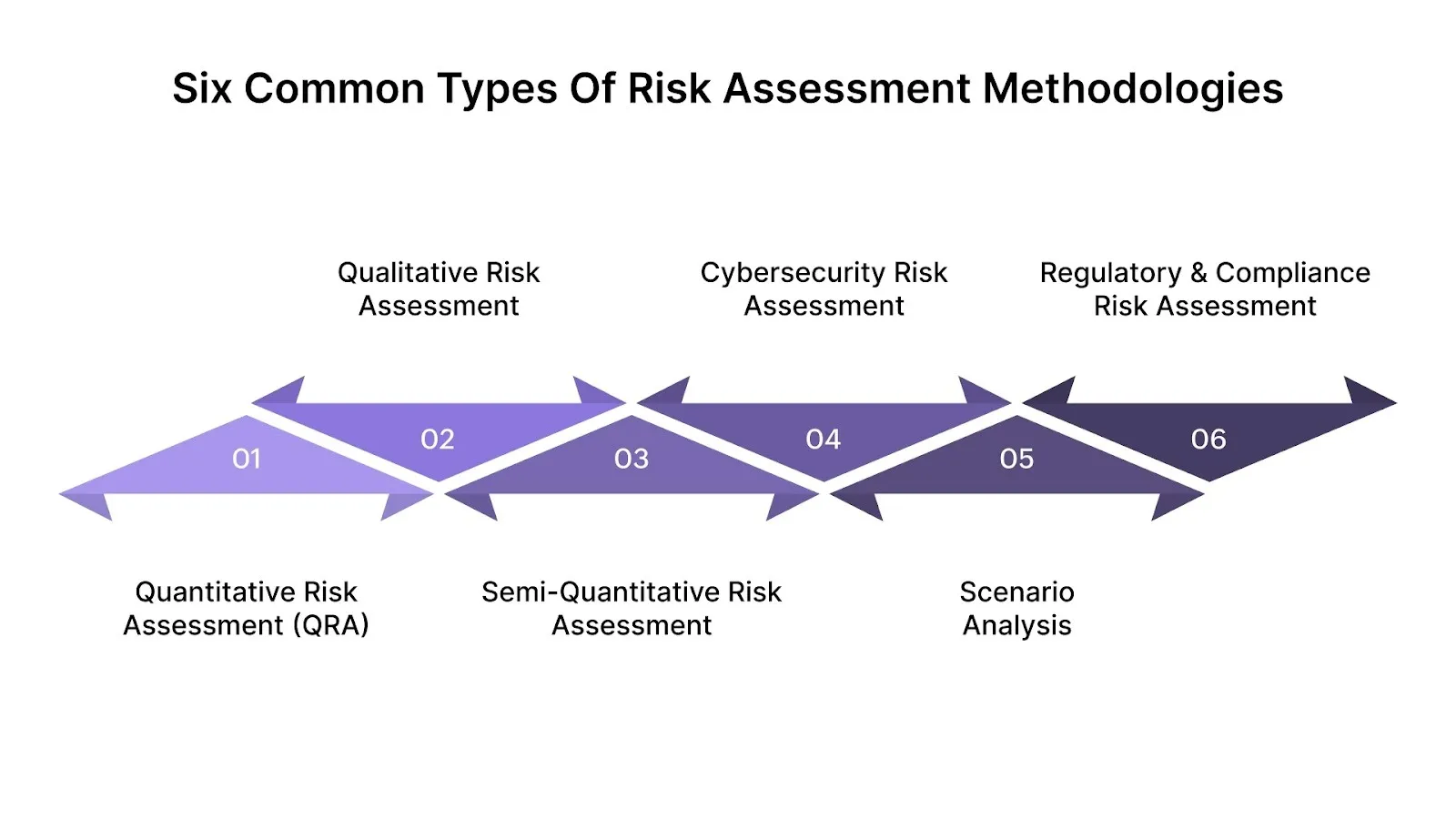
Risk assessment methodologies differ in their approach, each designed to address specific types of risks based on the business context and needs. Selecting the appropriate methodology is crucial for accurately evaluating potential threats and safeguarding assets.
Below, we’ll explore six common methodologies, highlighting their best uses and limitations.
1. Quantitative Risk Assessment (QRA)
Quantitative Risk Assessment uses numerical data and statistical methods to assess risk, providing precise estimates of potential financial loss or impact. This approach is best for assessing financial, market, or credit risks, where data can be measured and analyzed with high accuracy.
Best for: Financial institutions, investors, and businesses with access to relevant data for modeling risks.
Limitations: Requires large amounts of accurate data, making it challenging for businesses with limited information or in industries with high uncertainty.
2. Qualitative Risk Assessment
Qualitative Risk Assessment relies on expert judgment to evaluate the severity and likelihood of risks based on subjective assessments. It’s useful when quantitative data is scarce or when dealing with intangible risks, such as reputational or strategic risks.
Best for: Businesses in industries like Private Equity or real estate, where risks are difficult to quantify but still significant.
Limitations: The results can be influenced by bias, and they may lack precision in risk prioritization.
3. Semi-Quantitative Risk Assessment
Semi-quantitative risk assessment combines both qualitative and quantitative data to create a more balanced view of risk. This method assigns numerical values to qualitative judgments, allowing for a clearer risk ranking.
Best for: Businesses needing a flexible approach to risk assessment, especially in environments where both data and expert judgment are available.
Limitations: The accuracy of results depends on how well the subjective data is translated into numbers, which can introduce errors.
4. Cybersecurity Risk Assessment
Cybersecurity Risk Assessment evaluates the vulnerabilities in an organization’s IT systems and networks. With the rise of digital threats, this methodology enables businesses to identify and protect against cyberattacks, data breaches, and other security threats.
Best for: Companies in sectors like FinTech and crypto, where digital assets are a primary focus and cybersecurity risks are prevalent.
Limitations: This approach is highly specialized and may not be suitable for organizations without significant IT infrastructure or security needs.
5. Scenario Analysis
Scenario Analysis involves assessing the potential impact of various hypothetical situations or events, helping businesses prepare for extreme or unlikely risks. This method enables companies to assess how various risks, such as economic downturns or natural disasters, may impact their operations.
Best for: Businesses in industries facing high levels of uncertainty or volatility, like private equity or global real estate.
Limitations: Scenarios are based on assumptions that may not always reflect reality, thereby limiting their predictive value.
6. Regulatory & Compliance Risk Assessment
Regulatory & compliance risk assessment focuses on ensuring a business adheres to local and international regulations. This methodology helps companies avoid legal penalties and fines by identifying areas where compliance is at risk.
Best for: Businesses operating in highly regulated sectors like banking, FinTech, and healthcare, where adherence to laws is critical.
Limitations: Regulatory requirements can change frequently, making it challenging for businesses to stay current with the latest standards and compliance demands.
Also Read: Third-Party Risk Assessment Guide and Best Practices
Once you understand the different risk assessment methodologies, it’s essential to choose the right one for your business’s needs and goals.
How to Choose the Right Risk Assessment Methodology

Selecting the right risk assessment methodology is crucial to ensuring an accurate evaluation of risks. Each methodology offers unique strengths and weaknesses, and choosing the best one depends on various factors, including industry, risk type, and available data.
Here are key factors to consider when choosing a risk assessment methodology:
- Identify the Type of Risk
Different types of risk require different approaches. For example, financial risks are often best assessed through quantitative methods, while operational or reputational risks may require qualitative or semi-quantitative approaches. Understanding the type of risk you're facing is the first step toward choosing the right methodology.
- Consider Available Data
The methodology you choose will depend heavily on the quality and availability of data. Quantitative methods require accurate and comprehensive data, while qualitative assessments rely more on expert judgment. Businesses with limited or fragmented data may need to adopt a more flexible approach.
- Understand Regulatory Requirements
In industries such as banking, FinTech, and Private Equity, risk assessment must comply with stringent regulations. Regulatory frameworks often dictate specific risk management practices, which may influence the choice of methodology. Ensuring your approach aligns with these requirements will help you avoid legal and compliance issues.
- Evaluate Your Business's Complexity
The complexity of your business operations plays a significant role in determining the most effective methodology. Larger or multi-jurisdictional businesses may require more comprehensive methodologies, such as scenario analysis or hybrid methods, to assess risks across various domains. Smaller businesses may find qualitative methods more practical.
- Consider Stakeholder Involvement
Some methodologies require extensive stakeholder involvement, particularly when expert judgment is needed. If your business has a diverse range of departments or stakeholders involved in risk management, ensure the methodology chosen can accommodate input from all relevant parties.
- Assess the Cost and Time Involved
Finally, consider the cost and time it takes to implement each methodology. Some methods, like quantitative risk assessments, can be resource-intensive and require sophisticated tools or software. Others, such as qualitative assessments, may be quicker and less expensive but could lack precision.
Also Read: Third-Party Risk Assessment Guide and Best Practices
Once you've chosen the right methodology, the next step is to explore the tools and techniques that can enhance your risk assessment process.
Essential Tools and Techniques for Effective Risk Assessment

While selecting the right methodology is essential, using the right tools and techniques can further improve the accuracy and efficiency of your risk assessments. Several tools are designed to automate, visualize, and improve risk management processes.
Here are various tools and techniques that can enhance your risk assessment processes:
- Risk Matrices & Heat Maps
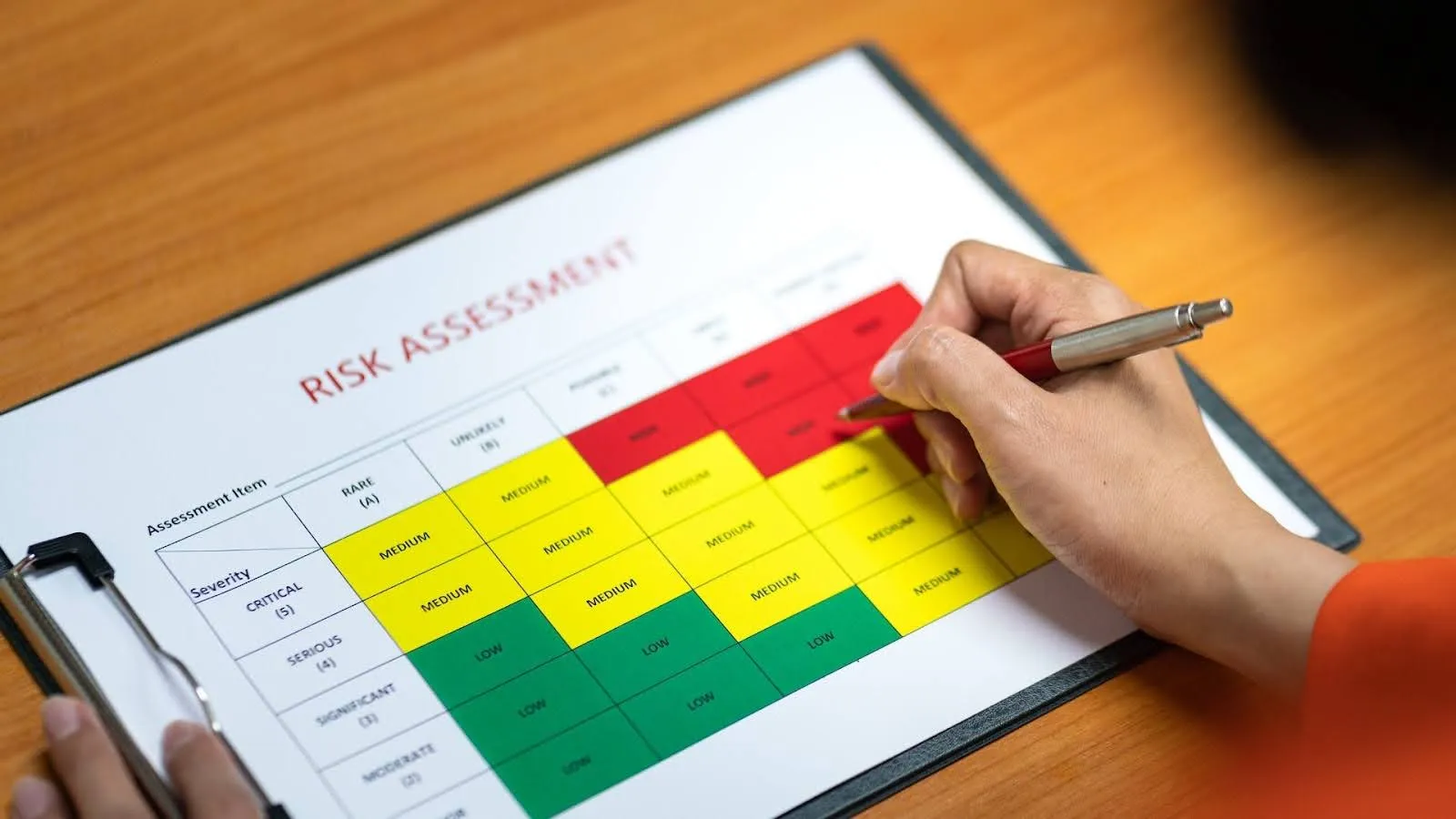
Risk matrices and heat maps are visual tools that help businesses assess and prioritize risks based on their likelihood and potential impact. These tools offer a straightforward and intuitive way to represent risks and facilitate quick decisions.
Best for: Businesses that need to prioritize risks visually and communicate them clearly to stakeholders.
Limitations: May oversimplify complex risk scenarios and lack the precision of quantitative methods.
- Risk Management Software
Risk management software platforms automate the risk assessment process, making it easier to track, monitor, and report on risks. These platforms often integrate with other business systems, providing a centralized view of all risk-related data.
Best for: Companies with large operations or those seeking to automate their risk management processes to enhance consistency.
Limitations: Software can be expensive, and implementation requires training and time to fully integrate the system.
- Scenario Analysis Tools
Scenario analysis tools simulate different risk events or business conditions to evaluate their potential impact. These tools enable businesses to assess how changes in the market, regulations, or external factors may impact their operations.
Best for: Businesses operating in volatile markets or those with significant exposure to external factors like regulatory changes or economic downturns.
Limitations: Scenario assumptions may not always reflect future conditions, which can reduce predictive accuracy.
- Risk Scoring Systems
Risk scoring systems assign numerical values to risks based on their probability and potential impact, enabling businesses to quantify their exposure. These systems offer a simple way to prioritize risks, allowing you to focus on the ones that matter most.
Best for: Organizations with limited data or those in industries where qualitative risk assessments are often used.
Limitations: May lack the granularity needed for complex or multifaceted risks.
- Automated Risk Monitoring Tools
Automated risk monitoring tools help businesses continuously track risks in real time. These tools use algorithms and AI to detect emerging threats, ensuring that businesses are proactive in managing potential risks.
Best for: Businesses in high-risk industries like crypto or banking, where real-time monitoring is crucial for maintaining security and compliance.
Limitations: Automation can sometimes miss nuanced risks or rely too heavily on predefined algorithms.
- Expert Interviews & Surveys
Conducting expert interviews and surveys can help gather insights and opinions from key stakeholders, adding qualitative data to the risk assessment process. This technique helps fill gaps in data where quantitative methods may fall short.
Best for: Organizations where expert judgment and industry knowledge are critical for assessing risks, especially when quantitative data is insufficient.
Limitations: Subjective and can be influenced by bias or incomplete information from the experts involved.
Now that we’ve covered the key tools and techniques, let’s walk through the process of implementing them in a structured way.
Also Read: Risk-Based Approach for Better Risk Management in Business
Step-by-Step Guide to Effectively Implementing Risk Assessment
Executing a risk assessment in practice involves a structured approach that helps businesses identify and address risks effectively. Following a clear, step-by-step process ensures that all risks are considered and the appropriate actions are taken.
Here are the key steps involved in performing a risk assessment:
- Define Purpose & Objectives
The first step in any risk assessment is to clearly define your goals and objectives. This ensures the process aligns with your business needs and risk tolerance. Knowing what you want to achieve will guide the methods and tools you select.
- Identify Scope & Context
Next, identify the scope of your risk assessment. Define which aspects of the business, departments, or markets will be included. The context in which risks arise, such as the regulatory environment, operational conditions, or market factors, also needs to be considered.
- Identify Risks
Identify all potential risks that could impact your business, including financial, operational, regulatory, and cybersecurity issues. Involve key stakeholders and industry experts to spot risks that may not be immediately visible.
- Assess & Evaluate Risks
Once you’ve identified the risks, evaluate how likely they are to occur and how much they could affect your business. Quantitative methods like probability analysis help measure risks with more precision, while qualitative methods address less tangible threats.
- Develop Risk Mitigation Strategies
Once risks are evaluated, develop strategies to mitigate them. This might involve reducing the risk, transferring it (e.g., through insurance), or accepting it if the potential impact is minimal. Effective mitigation strategies are key to minimizing future losses or disruptions.
- Monitor & Review Risks
Risk management is an ongoing process. Once mitigation strategies are implemented, regular monitoring is essential to ensure they remain effective. Reassess risks periodically, especially when business conditions, markets, or regulations change.
- Communicate Risk Findings
Finally, communicate your findings and risk management strategies to stakeholders. This includes sharing risk assessments, mitigation plans, and monitoring results with decision-makers and investors. Clear communication supports transparency and ensures alignment with business objectives.
Also Read: The Risk Assessment Process in Fintech: A Step-by-Step Overview
Once you’ve outlined your risk assessment process, the next step is to consider how it differs across various industries and sectors.
How Risk Assessment Varies Across Different Industries

Different industries face unique risks, which require tailored risk assessment methodologies to address effectively. Understanding these specific risks allows companies to implement more precise risk management strategies.
Here’s how risk assessment methodologies vary across key industries:
- FinTech & Banking
FinTech and Banking industries deal with a variety of risks, including regulatory compliance, fraud prevention, and market risks. Given the highly regulated nature of these sectors, businesses must ensure they adhere to local and international regulations.
Key Considerations:
- Regulatory compliance (e.g., Basel III, GDPR)
- Cybersecurity threats and financial crime prevention
- Credit, market, and liquidity risk management
Best Practices:
- Implement continuous monitoring systems to detect financial crimes or fraud.
- Ensure compliance with international standards and local regulations
- Use quantitative models to assess credit and market risks
- Crypto & Digital Assets
The Crypto industry presents unique risks due to its decentralized nature, volatility, and evolving regulatory environment. Businesses in the crypto sector face the challenge of safeguarding digital assets while complying with varying international regulations.
Key Considerations:
- Regulatory fragmentation across jurisdictions
- High market volatility and liquidity risks
- Cybersecurity risks related to digital asset custody
Best Practices:
- Ensure compliance with AML and KYC regulations
- Use scenario analysis to prepare for volatile market conditions
- Invest in robust cybersecurity measures to protect digital assets
- Private Equity & Real Estate
Private Equity and Real Estate face risks related to asset valuation, liquidity, and regulatory requirements across multiple jurisdictions. These sectors also contend with economic shifts that can impact market conditions and investment returns.
Key Considerations:
- Asset valuation and exit timing
- Liquidity and capital allocation risks
- Cross-border regulatory compliance, including tax laws
Best Practices:
- Regularly reassess the valuation of real estate and private equity investments.
- Use qualitative assessments to evaluate market risks and geopolitical stability.
- Develop strategies for cross-border tax and compliance risks
Understanding how risk assessment changes across industries can help you identify common pitfalls and ensure you’re managing risks properly.
Take advantage of Fraxtional’s experienced leaders to secure comprehensive risk assessments and ensure your business is prepared for regulatory challenges.
Common Pitfalls in Risk Assessment and How to Avoid Them

Risk assessment isn’t a one-off task; it requires ongoing monitoring and regular updates to stay effective and relevant to your business. Many businesses make common mistakes that reduce the effectiveness of their risk management strategies. Identifying these pitfalls early can help businesses improve their risk assessment processes and avoid costly consequences.
In this section, we’ll discuss some of the most common pitfalls in risk assessment:
- Relying on Outdated Data
Using outdated or incomplete data is a critical mistake in risk assessment. Without current data, the risk evaluation may be inaccurate, leading to poor decision-making.
How to Avoid It:
- Regularly update data sources and reassess risks based on the latest market and regulatory information.
- Use real-time data when possible, especially for rapidly changing industries like crypto or fintech.
- Overlooking Emerging Risks
Many businesses fail to consider emerging risks, such as cybersecurity threats or regulatory changes. This can lead to significant gaps in risk management, especially in industries like banking or real estate.
How to Avoid It:
- Regularly review and adjust your risk models to account for new and emerging risks.
- Stay informed about industry trends and evolving regulations to stay ahead of potential threats.
- Failing to Engage Stakeholders
A common pitfall is not involving the right stakeholders in the risk assessment process. Without input from key departments or experts, a business may miss critical risks that are hard to detect.
How to Avoid It:
- Involve cross-functional teams, including legal, compliance, and operations, in the risk assessment process.
- Conduct regular meetings with stakeholders to discuss risks and ensure alignment with business objectives.
- Treating Risk Assessment as a One-Time Event
Many businesses view risk assessments as one-off tasks rather than ongoing processes. This approach fails to account for the changing nature of risks, especially in volatile markets.
How to Avoid It:
- Set up continuous risk monitoring and make regular updates to risk assessments as market conditions and regulations change.
- Implement a feedback loop to improve risk management strategies over time.
- Ignoring the Human Element
While data and analytics are crucial, ignoring the human side of risk can be a significant mistake. Human behavior, organizational culture, and internal processes all impact risk.
How to Avoid It:
- Include assessments of human and organizational factors in your risk evaluations.
- Train staff to recognize and report potential risks, and encourage a risk-aware culture within your business.
To avoid these common pitfalls in risk assessment, consider partnering with experts who specialize in Anti-Money Laundering Services or Risk Assessment Services. With the right support, you can ensure your processes are both effective and compliant, protecting your business from potential threats.
Conclusion
Effective risk assessment is essential for businesses to mitigate potential threats and ensure long-term success. By selecting the right methodologies and tools, businesses can better manage risks, comply with regulations, and protect their assets. Regular risk assessments and continuous monitoring help businesses stay prepared for new threats and adjust to changes in the industry.
For businesses aiming to improve their risk management, it’s essential to adopt solutions tailored to their specific challenges and requirements. Don’t let outdated methods or overlooked risks jeopardize your business’s growth and stability.
Contact Fraxtional today to learn more about how our expert risk assessment strategies can help your business address its specific challenges and stay ahead of potential threats. Let us guide you in securing a stable and compliant future.
FAQs
Risk assessments should be performed regularly, especially when there are significant changes in the business environment, such as regulatory updates or market shifts. At a minimum, assessments should be conducted annually, but quarterly or monthly reviews may be necessary for high-risk sectors.
Choosing the appropriate methodology depends on factors like the type of risk you're facing, the industry you're in, available data, and regulatory requirements. A mix of methodologies might be necessary to address different types of risks effectively.
External audits can offer an independent view of your risk management practices and identify gaps that may not be visible internally. They help ensure compliance with regulations and provide an objective perspective on the risks your business faces.
Yes, small businesses can benefit from similar risk assessment methods, but they might choose simplified approaches due to resource limitations. Tools like risk matrices or qualitative assessments can help smaller organizations effectively manage risks within their capacity.
Staying compliant requires regular monitoring of regulatory changes, continuous employee training, and the integration of compliance checks into your risk management strategy. Using tools that automate updates and integrating them into your workflow can also reduce compliance risks.
blogs
Don’t miss these
.jpg)


Let’s Get Started
Ready to Strengthen Your Compliance Program?
Take the next step towards expert compliance solutions. Connect with us today.