

Mar 13, 2026
ACH Payments News Today: Industry Updates and Trends (2026)

By Fraxtional LLC

Summarize the blog with AI
The ACH network remains one of the most critical components of the U.S. payment infrastructure. As fintech companies, banks, and payment platforms continue to expand digital financial services, ACH payments are evolving rapidly.
Recent developments across the payments ecosystem show how financial institutions are modernizing ACH capabilities, strengthening fraud monitoring, and improving operational efficiency. For fintech companies and financial institutions, staying informed about these changes is essential to manage risk and maintain regulatory compliance.
This article highlights the most important ACH payments news today, including industry trends, ecosystem developments, and what these updates mean for fintech companies operating in regulated financial environments.
Quick look
- ACH payment volumes are rising, making fraud monitoring and payment controls a bigger priority for fintech companies and banks.
- Recent ACH updates are centered more on payment operations, risk oversight, and infrastructure improvements than on new rule explanations.
- Higher ACH activity can increase exposure to unauthorized transactions, return issues, and operational compliance gaps.
- Fintech companies need stronger internal controls, monitoring processes, and compliance oversight as payment volumes grow.
- Fraxtional helps fintech companies manage ACH compliance with experienced risk and compliance leadership without a full-time executive hire.
Why ACH Payments Continue to Grow
Automated Clearing House (ACH) payments remain a foundational part of the U.S. financial system. Businesses rely on ACH transfers for payroll, bill payments, government disbursements, subscriptions, and business-to-business transactions.
According to the National Automated Clearing House Association (Nacha),the ACH Network processed 35.2 billion payments in 2025, reflecting continued growth as digital bank-to-bank transactions expand across fintech and financial services.
Several factors are driving this growth:
1. Cost Efficiency
ACH transfers are significantly less expensive than card payments or wire transfers. Businesses processing large payment volumes rely on ACH to manage operational costs.
2. Fintech Integration
Many fintech products depend heavily on ACH infrastructure. Digital banks, payment apps, lending platforms, and subscription services all use ACH to move funds between accounts.
3. Recurring Payment Models
Subscription services, SaaS platforms, and payroll providers frequently use ACH for recurring transactions due to its reliability and low cost.
Because ACH plays such a central role in financial infrastructure, developments across the network are closely watched by banks, fintech firms, and regulators.
Key ACH Payments News and Ecosystem Developments

The ACH ecosystem is evolving quickly as transaction volumes increase and regulators set stronger fraud-monitoring expectations. For fintech companies operating within bank partnerships, these developments directly impact payment operations, compliance oversight, and risk management.
Below are some of the most important ACH payments news updates shaping the industry today.
Why These Updates Matter
Taken together, these developments show a clear shift in the ACH ecosystem:
- ACH volumes are increasing rapidly
- Businesses expect faster settlement through Same Day ACH
- Fraud monitoring and compliance expectations are expanding
For fintech companies, these changes mean that managing ACH is not just about moving payments, it's about developing risk and compliance strategies that keep pace with transaction growth.
Fintech companies need strong compliance leadership to scale payment monitoring and controls as transaction volumes grow, especially in bank-fintech partnerships, where ACH compliance expectations are rising.
Fraxtional provides fintech companies with access to experienced compliance and risk executives who help strengthen ACH oversight, build payment compliance frameworks, and support regulatory readiness. If your organization is scaling ACH payment operations and needs stronger compliance leadership, reach out today to learn how Fraxtional can support your team.
Fraud and Risk Trends Affecting ACH Transactions
With growing transaction volumes comes increased attention from regulators and financial institutions regarding payment security and fraud prevention.
Several risk trends are shaping how organizations manage ACH payments.
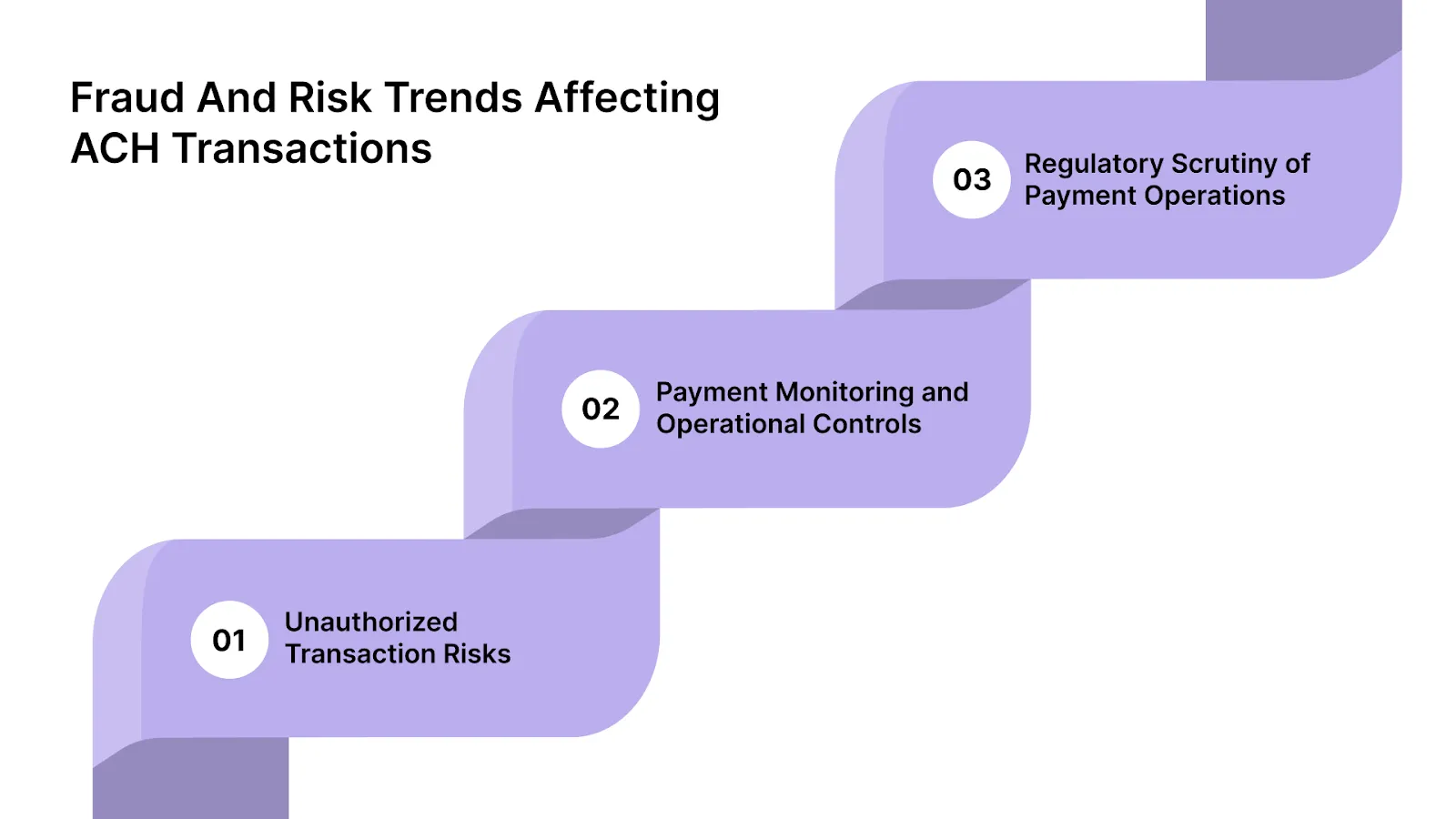
1. Unauthorized Transaction Risks
Unauthorized debit transactions remain a major concern for banks and fintech companies. Consumers can dispute unauthorized ACH payments, leading to return transactions and compliance monitoring.
Organizations must implement controls to reduce the likelihood of unauthorized transactions and ensure proper authorization processes.
2. Payment Monitoring and Operational Controls
Financial institutions are strengthening internal controls to detect anomalies in ACH activity. This includes monitoring return rates, payment patterns, and unusual transaction volumes.
Operational oversight helps organizations identify potential compliance issues before they escalate into regulatory concerns.
3. Regulated Scrutiny of Payment Operations
Regulators continue to examine how financial institutions manage payment risk and financial crime exposure.
Institutions processing large ACH volumes must demonstrate that they maintain:
- strong compliance frameworks
- clear transaction monitoring processes
- documented internal controls
Companies that lack these systems in place may face regulatory challenges as payment activity grows.
As these fraud and risk pressures increase across ACH operations, fintech companies and financial institutions must strengthen both payment oversight and compliance leadership to manage growing transaction volumes responsibly.
What These Developments Mean for Fintech Companies

Fintech companies rely heavily on ACH infrastructure to power their financial products. As ACH payments expand across the industry, fintech firms must balance growth with responsible risk management.
Key operational considerations include:
- Payment Risk Management: High transaction volumes can increase exposure to fraud, unauthorized payments, and operational errors. Fintech companies must implement effective monitoring systems to maintain payment integrity.
- Regulatory Compliance Expectations: Banks and regulators increasingly expect fintech companies to demonstrate strong compliance programs, especially when operating within bank-fintech partnerships.
- Operational Scalability: As fintech platforms grow, ACH payment operations become more complex. Companies must ensure their payment infrastructure can scale while maintaining security and compliance.
As ACH payment operations grow in scale and complexity, fintech companies must strengthen oversight across their payment systems. Experienced compliance leadership often becomes essential to manage risk and maintain regulatory alignment.
The Role of Compliance Leadership in ACH Payment Operations
Managing ACH payments at scale requires more than technical infrastructure. It also requires experienced compliance leadership that understands regulatory expectations and payment risk management.
Many fintech companies reach a stage where compliance oversight becomes critical. This is particularly true when companies begin processing large payment volumes or working with sponsor banks.
Compliance leadership can help organizations:
- establish strong payment compliance frameworks
- oversee risk management programs
- support regulatory readiness
- guide operational controls for payment activity
Experienced compliance professionals can help ensure that ACH payment operations remain aligned with regulatory expectations as companies grow.
How Fraxtional Helps Fintech Companies Manage ACH Compliance?
As ACH payment activity grows, fintech companies often require experienced compliance leadership to manage risk and meet regulatory expectations.
Fraxtional provides access to senior compliance and risk executives who work directly with fintech teams to strengthen oversight across payment operations. This model allows companies to benefit from executive-level expertise without hiring full-time compliance leaders.
Fraxtional supports fintech companies with:
- Compliance Leadership Support: Access experienced leaders such as Chief Compliance Officers, Chief Risk Officers, and AML specialists who guide payment compliance programs.
- ACH and Payment Risk Oversight: Support risk management programs that monitor ACH transaction activity, identify anomalies, and maintain operational controls.
- AML and Financial Crime Compliance: Build and maintain AML programs designed to detect suspicious payment activity and support regulatory reporting obligations.
- Regulatory Readiness and Compliance Frameworks: Develop policies, internal controls, and compliance programs aligned with financial regulatory requirements.
- Sponsor Bank Compliance Support: Help fintech companies strengthen compliance frameworks required for bank partnerships and payment processing relationships.
Strong compliance leadership helps fintech companies manage ACH operations responsibly. Access to experienced compliance professionals allows companies to scale payment infrastructure while maintaining regulatory oversight.
Wrapping Up
ACH payments continue to grow as fintech platforms and financial institutions expand digital payment services. Rising transaction volumes are increasing the need for stronger fraud monitoring, risk controls, and compliance oversight.
Fraxtional supports fintech companies with experienced compliance and risk leadership to help manage ACH payment operations. This allows organizations to strengthen regulatory alignment without hiring full-time executives.
Contact us today to learn how compliance leadership can support your ACH payment operations.
FAQs
ACH payments are processed in batches through the Automated Clearing House network, while wire transfers move funds individually in real time. ACH transactions are generally lower cost but may take longer to settle compared to wires.
Standard ACH payments usually settle within one to two business days. Same Day ACH options are available for eligible transactions, allowing funds to be processed within the same business day.
ACH payments are considered secure when proper authorization and monitoring controls are in place. Financial institutions use transaction monitoring, verification processes, and fraud detection systems to reduce payment risks.
ACH payments are widely used by payroll providers, subscription platforms, SaaS companies, lenders, and government agencies. These businesses rely on ACH for recurring payments and high-volume bank-to-bank transfers.
Same Day ACH is a payment processing option that allows eligible ACH transactions to settle within the same business day. It helps businesses move funds faster while still using the ACH network infrastructure.
blogs
Don’t miss these



Let’s Get Started
Ready to Strengthen Your Compliance Program?
Take the next step towards expert compliance solutions. Connect with us today.
Now Accepting:
BTC

ETH

USDC
USDP