

Apr 13, 2026
What Is Inclusive Leadership and Why It Matters?

By Fraxtional LLC
.jpg)
Summarize the blog with AI
Inclusive leadership matters most when decisions are hard, timelines are tight, and mistakes carry real consequences. In regulated industries, leaders don’t just set direction; they shape whether teams speak up or stay silent when risks appear. Over time, this behavior directly affects outcomes.
Research shows that inclusive and diverse companies generate 2.3 times higher cash flow per employee than less inclusive peers. That advantage doesn’t come from policies or statements. It comes from everyday leadership actions that invite challenge, surface concerns early, and prevent blind spots in decision-making.
Yet many organizations struggle to practice inclusion consistently, especially under pressure. Good intentions often break down when speed, hierarchy, or fear take over.
In this blog, we’ll discuss what inclusive leadership really means, why it matters in regulated setups, how it shows up in daily behavior, and how leaders can measure and strengthen it in practice.
Overview
- Inclusive leadership ensures all team members can raise concerns and contribute ideas, improving decision quality and preventing hidden risks in regulated industries.
- Diversity, inclusion, and belonging work together to surface perspectives, encourage open discussion, and create safe environments where compliance or operational issues are flagged early.
- Fractional leaders, including those deployed through Fraxtional, rely on traits like accountability, curiosity, awareness of bias, and cross-team collaboration to guide high-stakes decisions without full-time authority.
- Inclusive leadership becomes visible through everyday behaviors: thoughtful responses, asking probing questions, listening actively, creating space for different viewpoints, and connecting teams across functions.
- Common mistakes, such as overvaluing speed, ignoring dissent, or reacting defensively, undermine inclusion. Meanwhile, careful measurement through behavior and early warning signs keeps leadership accountable and effective.
What Is Inclusive Leadership?
.jpg)
Inclusive leadership is about ensuring every team member can share their ideas and raise concerns. This helps organizations spot risks early, make smarter decisions, and maintain strong compliance and governance even as the company grows quickly and operates in highly regulated industries.
In industries like FinTech, crypto, and banking, inclusive leadership is essential for preventing compliance mistakes and building trust with regulators and sponsor banks. For fractional leaders, it allows them to guide teams effectively and influence decisions without needing full-time authority, ensuring the organization stays secure and well-governed.
Inclusion vs Diversity vs Belonging
Inclusive leadership isn’t just about diversity; it’s about ensuring every team member can contribute, share concerns, and influence decisions. The table below explains how diversity, inclusion, and belonging drive safer, smarter outcomes.
Understanding these distinctions isn’t just academic. Diversity surfaces hidden risks, inclusion ensures all critical insights reach decision-makers, and belonging creates a safe environment where compliance and operational issues are flagged early. Together, they strengthen risk visibility, improve board-level decisions, and build trust with regulators and sponsor banks.
With these distinctions clear, we can examine why inclusive leadership strengthens risk visibility, improves decisions, and builds trust in high-stakes organizations.
Why Inclusive Leadership Matters in Organizations?
.jpg)
Inclusive leadership directly influences how regulated organizations identify hidden risks, make high-quality decisions, and maintain trust with regulators, sponsor banks, and investors. Beyond team dynamics, it shapes executive oversight, board reporting, and operational governance. Here’s how:
1. Strengthening Risk Visibility
Inclusive leaders ensure all perspectives are surfaced, helping teams spot hidden risks early, close compliance gaps, and reduce exposure. For executives and boards, this translates into documented, actionable insights that can be shared in board packets or sponsor-bank reviews, demonstrating that emerging risks are being monitored and managed proactively.
2. Improving Decision Quality
By actively encouraging diverse viewpoints, inclusive leadership prevents blind spots and groupthink. Executives and fractional leaders use this approach to ensure decisions are based on a complete picture of operational, regulatory, and financial risk, making board-level decisions more robust and defensible during audits or regulatory scrutiny.
3. Building Regulatory and Investor Confidence
Teams practicing inclusive leadership show accountability, transparency, and follow-through. Boards and regulators see evidence that the organization encourages open risk reporting and acts decisively on concerns, which strengthens investor trust and sponsor-bank relationships while reducing repeated audit findings.
4. Supporting Team Accountability and Collaboration
Inclusive leadership fosters an environment where employees feel safe to flag issues and propose solutions. From a governance perspective, this ensures operational gaps are escalated appropriately, ownership is clear, and cross-functional collaboration feeds into compliance-ready reporting for boards and oversight committees.
Knowing the benefits, it’s important to identify the traits that make leaders effective at ensuring inclusion consistently shapes team outcomes.
Also Read: Leadership in AML: Traits, Training, and Tactics for Modern Compliance Teams
Core Traits of Inclusive Leaders
Inclusive leaders combine specific traits that help regulated organizations. These traits are critical because they allow fractional leaders to influence teams, guide operations, and uphold governance standards without needing full-time authority. Let’s discuss these core traits one by one.
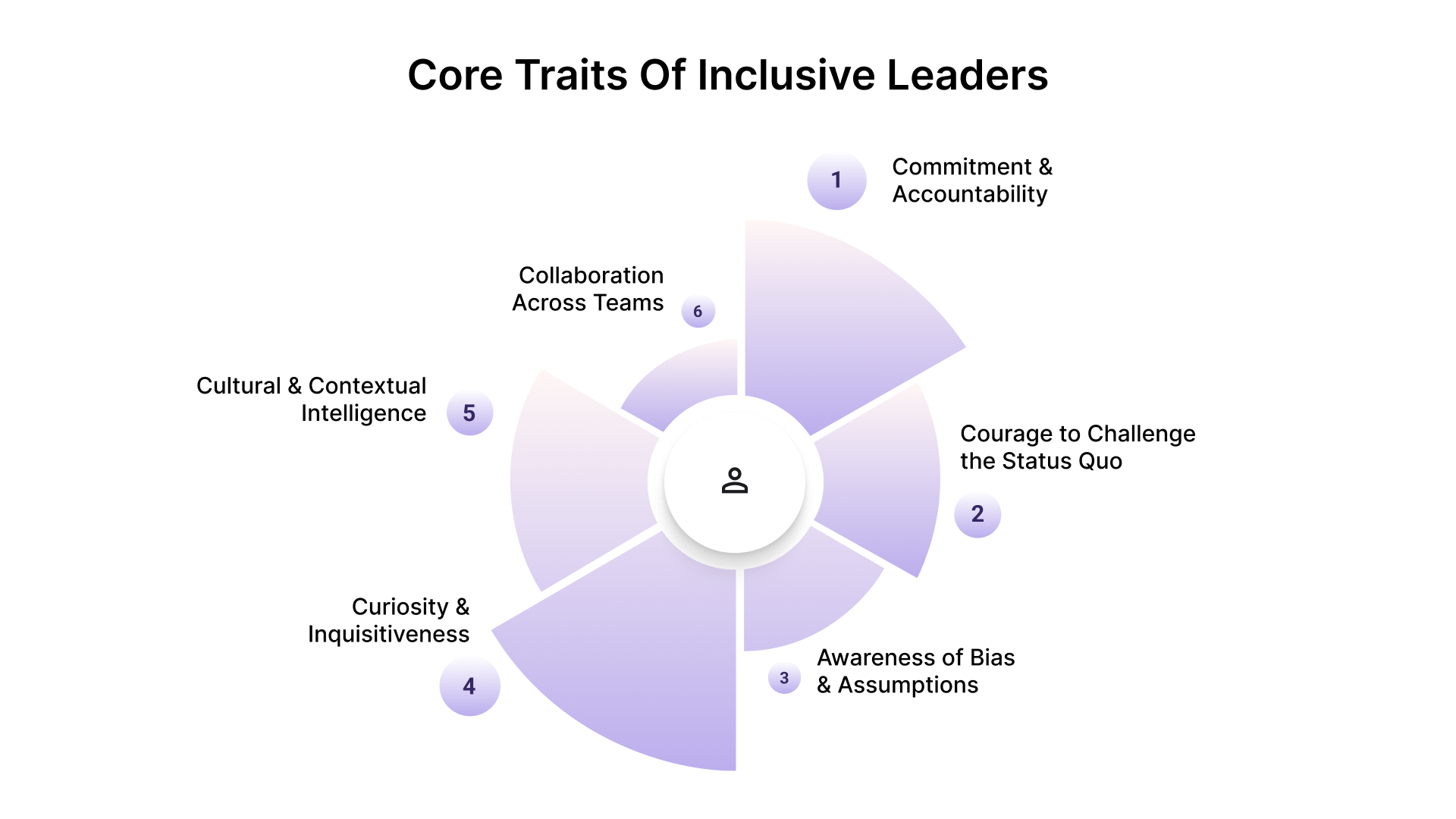
1. Commitment and Accountability
Fractional leaders show unwavering ownership of compliance and governance, ensuring regulatory requirements are met even without full-time authority. They track risks, follow through on audits, and hold themselves and stakeholders accountable for operational integrity.
2. Courage to Challenge the Status Quo
Inclusive leaders in FinTech, crypto, and banking question processes or decisions that could expose the organization to risk. They escalate compliance gaps, challenge ineffective workflows, and recommend stronger controls; even when it challenges senior leadership or existing norms.
3. Awareness of Bias and Assumptions
Fractional executives spot biases in risk assessments, internal controls, and decision-making. By acknowledging assumptions, they reduce blind spots that could compromise compliance, regulatory reporting, or sponsor bank relationships.
4. Curiosity and Inquisitiveness
Leaders ask the right questions to uncover hidden operational or regulatory risks. They probe inconsistencies, analyze edge cases, and explore alternative solutions, ensuring fractional teams identify gaps before they become costly compliance issues.
5. Cultural and Contextual Intelligence
Inclusive leaders understand regulatory nuances, market differences, and cultural contexts. They guide fractional teams across jurisdictions, tailor compliance approaches, and maintain sponsor bank confidence in high-stakes systems.
6. Collaboration Across Teams and Power Structures
Fractional leaders bridge teams, departments, and external partners to ensure compliance and governance insights are shared. They break silos, align risk strategies, and build accountability across temporary, cross-functional, or distributed teams.
Once traits are clear, we can see how these qualities translate into daily behaviors that protect compliance and prevent small issues from escalating.
Inclusive Leadership in Action: 7 Daily Behaviors That Matter
.jpg)
Inclusive leadership becomes real in everyday moments where pressure, hierarchy, and speed collide. The behaviors below show how leaders translate inclusive intent into concrete actions that protect compliance, improve judgment, and prevent small issues from turning into serious risks.
1. Responding Thoughtfully Instead of Reacting
In regulated environments, pressure situations are constant: regulatory inquiries, audit findings, and sponsor bank feedback. Inclusive leaders pause before reacting, assess impact, and respond deliberately, preventing rushed decisions that can escalate compliance or reputational risk.
In practice, this looks like:
- Pausing escalation until facts are verified
- Separating urgency from importance
- Addressing issues without blame or defensiveness
2. Asking Better Questions to Surface Risk
Inclusive leaders don’t assume; they probe. By asking precise, well-timed questions, they uncover gaps in controls, unclear ownership, or overlooked regulatory implications that teams may otherwise miss.
In practice, this looks like:
- Asking “What could go wrong here?” before approvals
- Challenging assumptions in risk assessments
- Encouraging teams to explain why, not just what
3. Listening to Understand, Not to Reply
Effective fractional leaders listen to fully learn concerns, especially from frontline teams closest to operational and compliance risk. This builds trust and ensures early warning signs aren’t dismissed or misunderstood.
In practice, this looks like:
- Letting teams explain issues without interruption
- Clarifying intent before responding
- Treating concerns as signals, not complaints
4. Making Space for Different Perspectives in Decisions
Inclusive leadership ensures decisions aren’t dominated by hierarchy or familiarity. By actively including legal, compliance, operations, and product perspectives, leaders reduce blind spots and strengthen governance outcomes.
In practice, this looks like:
- Inviting dissenting views before final decisions
- Involving compliance early, not after execution
- Documenting alternative viewpoints in decision logs
5. Leading With Vulnerability and Humility
Inclusive leaders acknowledge limits, especially as fractional executives entering new organizations. Admitting uncertainty encourages honesty, improves information flow, and prevents risks from being hidden to “look good.”
In practice, this looks like:
- Saying, “I may be missing something. What do you see?”
- Admitting when processes need improvement
- Welcoming corrections without defensiveness
6. Building Trust Through Meaningful Cross-Team Connections
Fractional leaders must quickly earn trust across functions and seniority levels. Inclusive leadership bridges silos, ensuring risk and compliance insights move freely across teams and decision-makers.
In practice, this looks like:
- Creating regular cross-functional touchpoints
- Connecting compliance with product and operations
- Aligning leadership, risk, and execution teams
7. Investing Time and Resources Where Inclusion Breaks Down
Inclusive leadership isn’t passive. Leaders actively identify where voices are excluded, overloaded teams, unclear escalation paths, or cultural barriers, and intervene before issues become systemic risks.
In practice, this looks like:
- Strengthening escalation and reporting mechanisms
- Allocating time for compliance input in fast-moving teams
- Supporting teams that consistently flag issues
Having explored daily behaviors, let’s discuss how leaders can start, using self-awareness and intentional actions to create a foundation for inclusion.
Also Read: How to Use a Gap Assessment Template Reviewers Actually Expect
Where to Begin With Inclusive Leadership?
.jpg)
Inclusive leadership starts with how you act, not what frameworks you introduce. Teams in high-stakes, regulated environments constantly watch leaders’ behavior to decide whether it’s safe to raise risks or challenge assumptions. Use these approaches to make inclusion real:
- Self-Reflection Matters: Examine how your authority, assumptions, and reactions shape who speaks up.
- Signal Safety: Small gestures, pausing before reacting, inviting dissent, show teams it’s safe to flag risks.
- Outcome Over Optics: Avoid initiatives that look inclusive but don’t affect decisions or risk reporting.
- Lead by Example: Demonstrate accountability, transparency, and curiosity consistently to make inclusion practical, not theoretical.
With foundational behaviors in mind, we can focus on embedding inclusion across teams, processes, and decisions in high-pressure setups.
How to Create Inclusion in the Workplace?
Creating inclusion is about designing everyday environments where teams feel safe to raise risks, challenge assumptions, and contribute meaningfully under pressure. Focus on these approaches:
- Psychological Safety: Ensure employees can speak up without fear of blame, dismissal, or retaliation, so risks surface early and issues are addressed before they escalate.
- Respect and Recognition: Acknowledge input, act on feedback, and explain decisions transparently to keep teams engaged, accountable, and proactive about risk.
- Integrated Processes: Build inclusion into meetings, approvals, escalations, and reviews, so diverse perspectives are consistently considered in compliance, governance, and operational decisions.
- Consistent Leadership Signals: Demonstrate inclusive behavior daily, listening actively, inviting dissent, and reinforcing accountability to make inclusion tangible, not theoretical.
Now that practical strategies are clear, it’s important to recognize common mistakes that often undermine inclusion and how leaders can correct them.
Common Mistakes That Undermine Inclusive Leadership
Even well-intentioned leaders often undermine inclusion not through what they say, but through everyday decision habits that quietly discourage challenge, silence risk signals, and weaken outcomes. Let's briefly explore these mistakes.
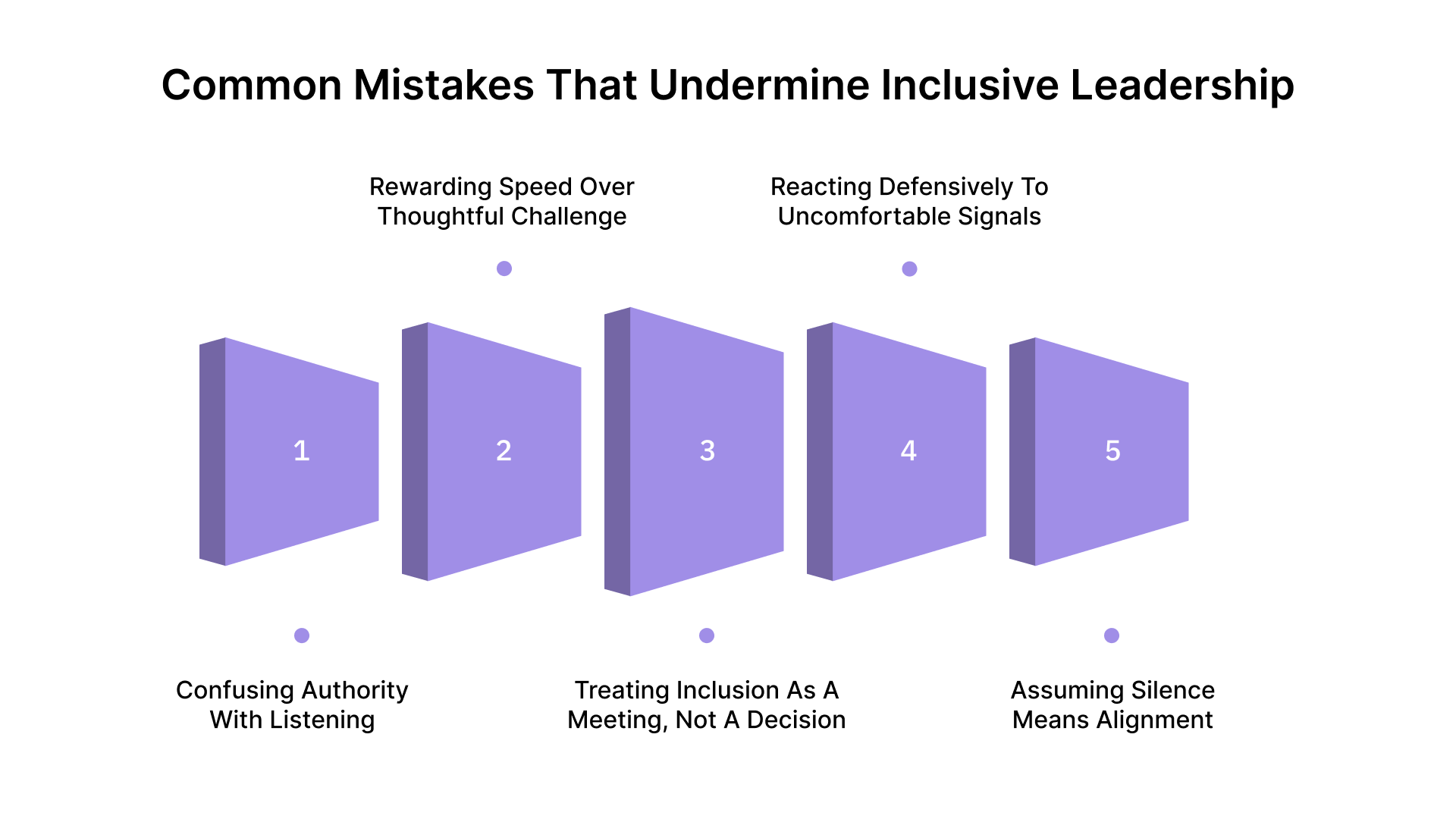
1. Confusing Authority With Listening
Leaders often dominate discussions or defer to hierarchy, silencing critical perspectives. The fix is to pause intentionally, invite dissent, and ensure compliance and risk inputs shape decisions before conclusions are finalized.
2. Rewarding Speed Over Thoughtful Challenge
Pushing for fast execution can discourage teams from questioning assumptions or raising concerns. Leaders must slow key decisions, normalize challenges, and reinforce that escalation protects governance and long-term outcomes.
3. Treating Inclusion as a Meeting, Not a Decision
Inviting feedback without reflecting it in outcomes affects trust. Leaders should clearly show how input influenced decisions or explain why it didn’t, so teams know their voices genuinely matter.
4. Reacting Defensively to Uncomfortable Signals
Dismissing concerns as noise or resistance trains teams to stay silent. Leaders must respond calmly, probe issues objectively, and treat discomfort as a signal of potential risk.
5. Assuming Silence Means Alignment
Lack of pushback is often mistaken for agreement, especially in high-pressure environments. Leaders should actively check for unspoken concerns and create space for quieter or junior voices to surface risks.
Having explored pitfalls, we can measure inclusion through observable behaviors and early warning signs to keep leadership accountable and risks surfaced.
How to Measure Inclusive Leadership?
Inclusive leadership shows up in patterns of behavior, decision quality, and how early teams surface risk. The right signals are observable, repeatable, and tied to outcomes.
1. Behavioral and Cultural Indicators of Inclusion
Inclusive leadership is visible when teams consistently challenge assumptions, escalate concerns without fear, and participate meaningfully in decisions. Look for who speaks in critical moments, whose input shapes outcomes, and whether disagreement is treated as a value rather than a disruption.
2. Early Signs That Inclusion Is Breaking Down
Inclusion starts falling apart when meetings become quieter, risks surface late, and decisions face repeated rework or surprise resistance. Defensive leadership responses, rushed consensus, and declining upward feedback are early warnings that must be fixed.
Once measurement is understood, we can see how Fraxtional applies these principles, embedding structured approaches and independent judgment where inclusion matters most.
How Fraxtional Shows Inclusive Leadership Where It Matters Most
.jpg)
Inclusive leadership often breaks down under pressure, hierarchy, and tight timelines. Fraxtional leaders don’t just advise; they step into the organization as embedded executives, participating in decisions that carry regulatory, operational, and reputational consequences.
They lead from within, ensuring diverse perspectives are surfaced, risks are flagged early, and critical decisions are made with clarity. Their role is about action in real-time leadership moments.
Fraxtional leaders provide:
- Independent executive perspective: Challenging assumptions, raising overlooked risks, and guiding boards or sponsors without internal bias.
- Structured decision oversight: Embedding frameworks for escalation, questioning, and review directly in the flow of operations.
- Early risk intervention: Identifying emerging issues before they escalate into compliance or operational incidents.
- Cross-functional leadership alignment: Connecting legal, compliance, operations, and product teams to ensure inclusive, accountable decisions.
By participating directly in high-stakes decisions, Fraxtional leaders make inclusive leadership visible, measurable, and operational, even in the most pressured environments.
Also Read: AI in Leadership: Embracing Innovation and Responsibility
Conclusion
Inclusive leadership is all about making better, safer decisions. When teams feel heard, risks surface early, blind spots are minimized, and operational and compliance outcomes improve. In regulated industries like FinTech, crypto, and banking, practicing inclusion consistently can be the difference between preventable errors and costly consequences.
Fraxtional helps leaders turn inclusive intentions into practical action. By embedding independent, senior judgment into high-stakes decisions, we ensure that diverse perspectives are surfaced, risks are flagged early, and teams collaborate effectively across functions. Our structured frameworks, early warning mechanisms, and cross-functional alignment make inclusion operational, helping organizations act confidently even under pressure.
If you want to strengthen your leadership, surface hidden risks, and ensure decisions are both inclusive and sound, contact Fraxtional today.
FAQs
A good inclusive leader listens actively, challenges assumptions, invites dissent, and responds calmly to risk signals. They ensure decisions reflect diverse perspectives and protect governance and compliance outcomes.
The five principles are self-awareness, curiosity, courage to challenge, accountability, and collaboration, enabling leaders to surface risks early, prevent blind spots, and make balanced decisions under pressure.
A major barrier is defensive leadership behavior, where speed, hierarchy, or ego discourages challenge, silences risk escalation, and causes teams to withhold concerns until problems become costly.
Organizations must create psychological safety, embed inclusion into decisions and processes, reward thoughtful challenge, and ensure leaders act on feedback so diverse voices meaningfully influence outcomes.
blogs
Don’t miss these



Let’s Get Started
Ready to Strengthen Your Compliance Program?
Take the next step towards expert compliance solutions. Connect with us today.